UST Projectors vs. Traditional Projectors: Which One Should You Buy?
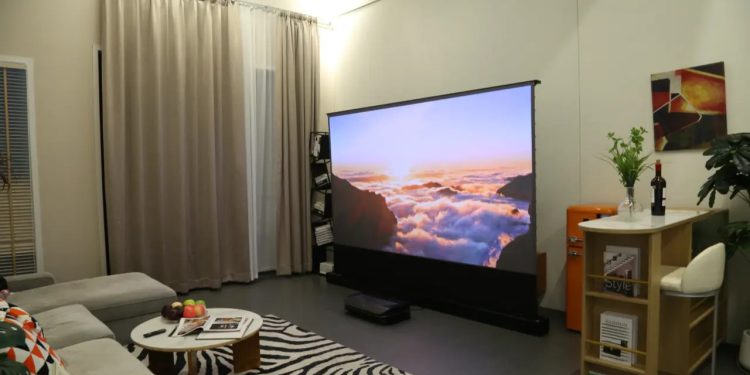
Choosing between an Ultra Short Throw (UST) projector and a traditional projector can feel overwhelming. Both deliver big-screen experiences, but their differences in installation, image quality, and space requirements make each suitable for distinct scenarios.
This guide breaks down:
✔ Key differences in design and performance
✔ Price comparisons and value analysis
✔ Best use cases for each type
✔ Top models to consider
Let’s settle the debate once and for all.
Key Differences at a Glance
| Feature | UST Projector | Traditional Projector |
|---|---|---|
| Throw Distance | 5–10 inches for 100″ screen | 5–10 feet for 100″ screen |
| Installation | Place on a media console | Ceiling/wall mount often required |
| Shadow Interference | None (projector near wall) | Frequent (beam crosses room) |
| Ambient Light | Works better with ALR screens | Needs darker rooms |
| Price Range | 1,500–1,500–5,000+ | 500–500–3,000+ |
Space and Installation: The Clear Winner?
UST Projectors: Compact and Flexible
- ✅ Fits small rooms (ideal for apartments or bedrooms).
- ✅ No mounting needed (sits on a TV stand or shelf).
- ✅ Family-friendly (no shadows when walking by).
Ideal for: Urban homes, living rooms with limited space.
Traditional Projectors: Distance Required
- ❌ Needs 5+ feet of throw distance (e.g., 10′ room = max 120″ screen).
- ❌ Ceiling mounts complicate setup (cables, alignment).
- ❌ Shadows disrupt viewing (beam crosses the room).
Ideal for: Dedicated home theaters with controlled lighting.
Image Quality: Laser vs. Lamp
UST Projectors (Laser/LED Dominance)
✅ Brighter (2,500–4,000 lumens) – Better for daytime use.
✅ Wider color gamut (e.g., Hisense PX1-Pro covers 110% BT.2020).
✅ No lamp replacements (20,000+ hour lifespan).
Traditional Projectors (Lamp vs. Laser)
✅ Cheaper entry point (e.g., $500 for 1080p models).
✅ More flexible lens options (zoom, lens shift).
❌ Lamp models dim over time (replace every 3,000–5,000 hours).
Verdict: UST wins for brightness and longevity, but traditional projectors offer budget flexibility.
Price Comparison: Upfront vs. Long-Term Costs
UST Projectors
Initial Cost: 1,500–5,000 (premium laser projector).
Hidden Costs: ALR screen recommended (500–2,000).
Savings: No lamp replacements, lower energy use.
Traditional Projectors
Initial Cost: 500–3,000 (lamp or laser).
Hidden Costs: Mounts, cables, lamps (100–300 each).
Break-Even Point: UST projectors cost less over 5+ years due to durability.
Best Use Cases
Choose a UST Projector If You…
- Want a TV replacement in a living room.
- Need easy, child/pet-friendly setup.
- Prefer daytime viewing with ambient light.
Top Pick: AWOL Vision LTV-3500 Pro 4K ultra short throw projector
Choose a Traditional Projector If You…
- Have a dedicated theater room (controlled lighting).
- Need larger screens (150″+).
- Want lens flexibility (zoom, shift).
Top Pick: Valerion VisionMaster Pro 2
Debunking 3 Common Myths
❌ “UST Projectors Can’t Do 3D or High Refresh Rates”
Truth: Models like the AWOL Vision LTV-3500 Pro support 3D and 120Hz gaming.
❌ “Traditional Projectors Are Always Cheaper”
Truth: Lamp replacements and screens add up—UST saves long-term.
❌ “You Need a Perfectly Flat Wall for UST”
Truth: While ALR screens help, UST works on textured walls (with minor focus adjustments).
Final Decision Flowchart
Room Size Small? → UST.
Daytime Viewing Important? → UST + ALR screen.
Need 150″+ Screen on Budget? → Traditional.
Gaming/Frequent Use? → UST (laser durability).
Conclusion: It Depends on Your Needs
UST projectors excel in convenience, brightness, and compact spaces.
Traditional projectors win for large dedicated theaters and budget setups.
Pro Tip: Pair a UST projector with an ALR screen (like XY Screens’ 100″ model) for the best hybrid solution.